



Jagannath Puri Rath Yatra: History, Significance, Route & Complete Travel Guide

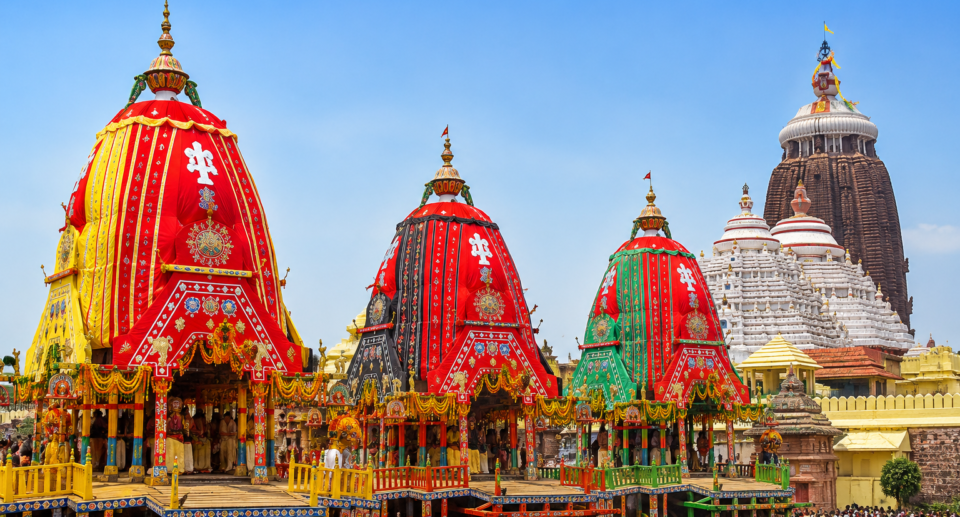
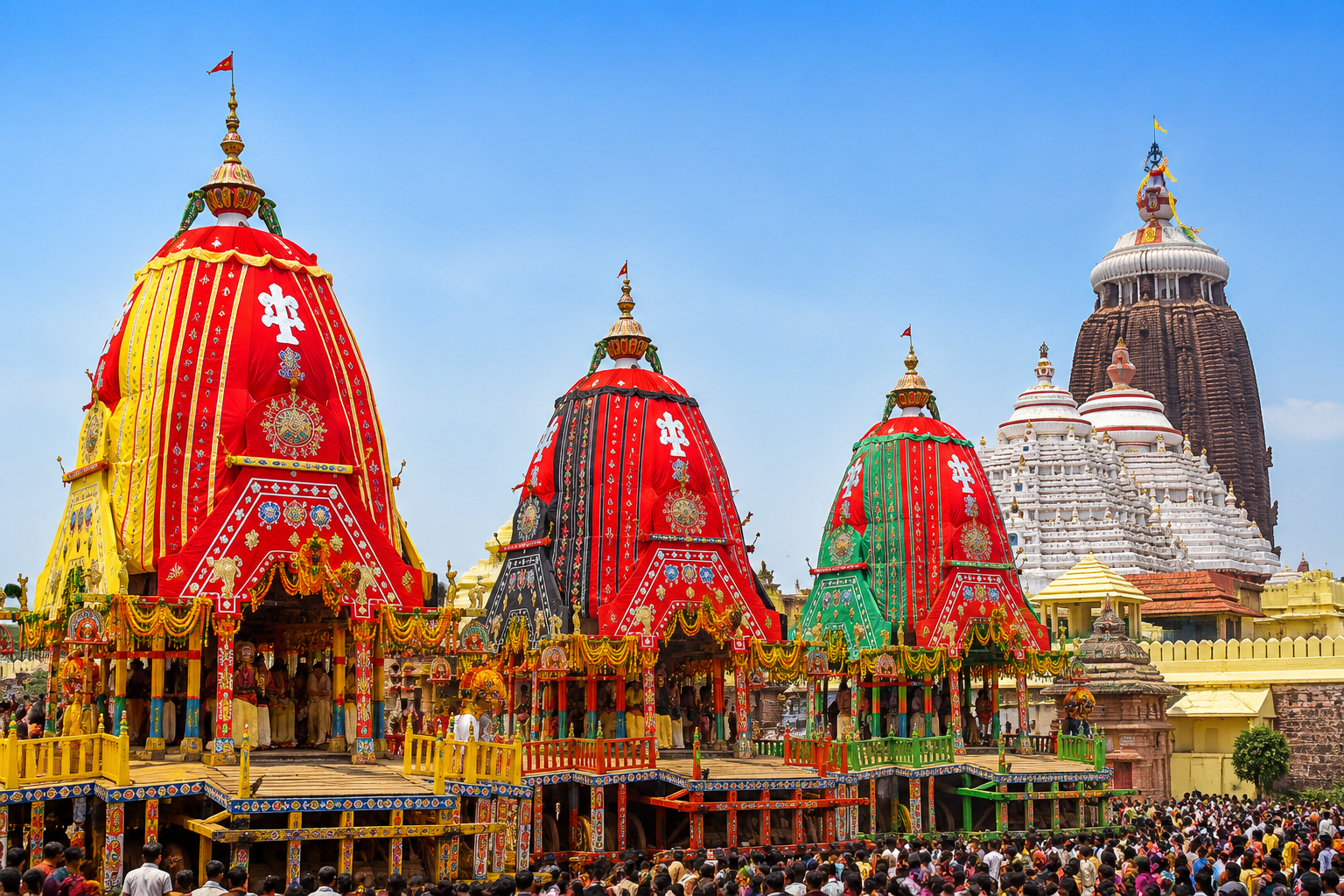
Every year, millions of devotees gather in Puri, Odisha, to witness one of the world’s largest and oldest religious festivals—the Jagannath Rath Yatra. During this grand celebration, Lord Jagannath, along with his brother Lord Balabhadra and sister Goddess Subhadra, comes out of the temple and travels in beautifully decorated wooden chariots.
The Rath Yatra is much more than a religious event. It is a symbol of devotion, equality, and faith. People from every religion, caste, and country come together to witness this magnificent festival. It is believed that seeing Lord Jagannath during the Rath Yatra brings blessings, removes sins, and fulfills wishes.
Table of Contents
What is Jagannath Rath Yatra?
Jagannath Rath Yatra is an annual chariot festival celebrated in Puri, Odisha. During the festival, Lord Jagannath, Lord Balabhadra, and Goddess Subhadra leave the Jagannath Temple and travel to the Gundicha Temple, which is considered their aunt’s home.
Unlike normal temple days where only Hindus can enter the temple, during Rath Yatra everyone gets an opportunity to see the deities from outside, making this festival unique and inclusive.
The festival usually takes place in June or July, on the Dwitiya Tithi of Shukla Paksha in the month of Ashadha according to the Hindu calendar.
About Jagannath Temple
The Jagannath Temple is one of the Char Dham pilgrimage sites in Hinduism and is among the holiest temples dedicated to Lord Vishnu.
Located in Puri, Odisha, the temple is famous for its unique wooden idols of:
- Lord Jagannath
- Lord Balabhadra
- Goddess Subhadra
The temple is believed to have been built during the 12th century by King Anantavarman Chodaganga Deva of the Eastern Ganga dynasty.
Its magnificent architecture, spiritual importance, and centuries-old traditions attract millions of pilgrims every year.
Jagannath Temple is not just famous for its architecture but also for its deep spiritual significance.
Why is Jagannath Temple So Important?
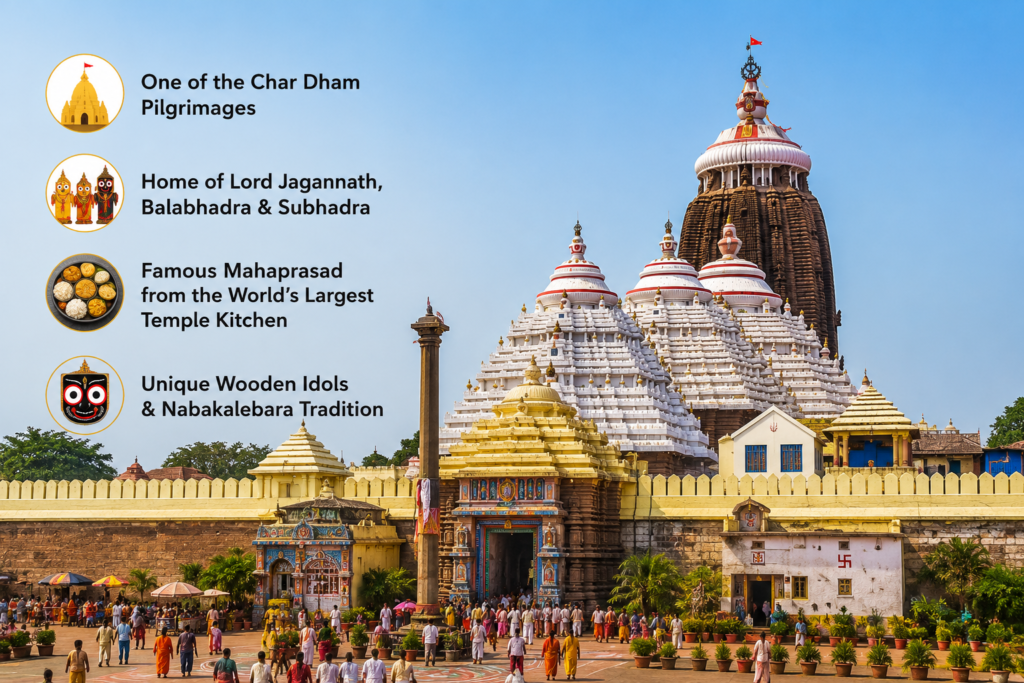
One of the Char Dham Pilgrimages
Every Hindu is encouraged to visit the Char Dham once in their lifetime, and Jagannath Puri is one of those four sacred places.
Home of Lord Jagannath
Lord Jagannath is considered a form of Lord Krishna, while Balabhadra represents Lord Balarama, and Subhadra is their sister.
Famous Mahaprasad
The temple kitchen is considered one of the largest in the world. Every day, thousands of devotees receive Mahaprasad prepared using traditional methods.
Unique Wooden Idols
Unlike most Hindu temples, the idols here are made of sacred wood and are replaced every 12–19 years during the Nabakalebara ceremony.
History of Jagannath Rath Yatra
The Rath Yatra has been celebrated for several centuries.
According to Hindu mythology, Goddess Subhadra once expressed her desire to visit her birthplace. Lord Jagannath and Lord Balabhadra decided to accompany her.
Since then, every year, the three siblings travel together to Gundicha Temple.
Another belief says the festival allows everyone—including those who cannot enter the temple—to receive the blessings of Lord Jagannath.
Mythological Story Behind Rath Yatra
Many devotees believe the Rath Yatra represents Lord Krishna’s journey to Vrindavan to meet his devotees.
The journey symbolizes:
- Love
- Devotion
- Equality
- Connection between God and devotees
During the festival, the Lord himself comes out to meet his people instead of waiting for devotees to visit him.
The Three Grand Chariots
Every year, three new wooden chariots are built.
1. Nandighosha (Lord Jagannath)
- Height: Around 45 feet
- Wheels: 16
- Flag: Trailokyamohini
2. Taladhwaja (Lord Balabhadra)
- Height: Around 44 feet
- Wheels: 14
3. Darpadalana (Goddess Subhadra)
- Height: Around 43 feet
- Wheels: 12
The chariots are built using traditional methods without nails and are decorated with colorful cloth, flowers, and carvings.
Rath Yatra Route in Puri, Odisha
The Rath Yatra begins from the Jagannath Temple.
Route
Jagannath Temple
⬇
Grand Road (Bada Danda)
⬇
Gundicha Temple
Distance: Approximately 3 km
Thousands of devotees pull the chariots using massive ropes.
The deities stay at Gundicha Temple for about seven days before returning to the Jagannath Temple during the Bahuda Yatra (Return Journey).
Major Rituals of Rath Yatra
Snana Purnima
The deities are bathed with 108 pots of holy water.
Anavasara
After the bath, the deities rest for about 15 days.
Rath Yatra
The grand procession begins.
Hera Panchami
Goddess Lakshmi symbolically visits Gundicha Temple.
Bahuda Yatra
Return journey to Jagannath Temple.
Suna Besha
The deities are decorated with beautiful gold ornaments.
Niladri Bijaya
The deities re-enter Jagannath Temple.
Why Millions Attend Rath Yatra?
People believe that:
- Pulling the chariot brings blessings.
- Seeing Lord Jagannath during Rath Yatra removes sins.
- The festival fulfills wishes.
- Everyone is equal before Lord Jagannath.
Best Time to Visit Puri
The best time to visit Puri is:
- October to February (pleasant weather)
- June or July if you specifically want to witness Rath Yatra.
Book hotels several months in advance if traveling during the festival.
How to Reach Puri?
By Air
- Nearest Airport:
- Biju Patnaik International Airport, Bhubaneswar – (Approx. 60 km)
By Train
Nearest Railway Station:
- Puri Railway Station
Well connected with Delhi, Mumbai, Kolkata, Chennai, Hyderabad, and Bengaluru.
By Road
- Regular buses and taxis are available from Bhubaneswar, Cuttack, and nearby cities.
Final Thoughts
Jagannath Puri Rath Yatra is not just a festival—it is an experience of faith, devotion, and unity. Watching the massive wooden chariots move through the streets of Puri while thousands of devotees chant “Jai Jagannath” creates an unforgettable atmosphere.
Whether you visit for spiritual reasons or to witness India’s rich cultural heritage, Rath Yatra offers a once-in-a-lifetime experience. If you ever get the opportunity to attend this grand celebration, don’t miss it. It is one of the most extraordinary festivals in the world.